

Modern Home Organization Essentials 2026: A Review
Last Updated: October 22, 2026
Quick Summary
Modern home organization in 2026 centers on modular, adjustable systems that protect storage capacity, cut visual clutter, and keep daily items within reach. The best essentials are shelving, rolling carts, and drawer organizers chosen by measuring your space first, then matching the piece to the opening.
- The 5-Tier Garage Shelving Unit costs $103.99 and holds 440 lbs per shelf.
- The 5-Tier Rolling Plastic Utility Storage Cart at $45.99 has two locking wheels.
- The Natural Bamboo Drawer Organizer Set at $24.99 includes four trays with adjustable dividers.
- Sort first, rehome second, store third, and buy containers only after measuring.
- A weekly 10-minute reset beats a lost weekend every spring.
Table of Contents
- Why Modern Home Organization Matters in 2026
- Best Home Organizing Products for 2026
- Small Space Storage Solutions That Work
- Small Closet Organization Ideas for Renters and Owners
- Decluttering Tips for Small Homes
- How to Choose the Right Modern Home Organization Essentials
- Conclusion
- Frequently Asked Questions
Why Modern Home Organization Matters in 2026
Home organization has shifted from a spring cleaning chore to an ongoing system for daily life. A well-planned setup does three jobs at once: it protects your storage capacity, cuts visual clutter, and makes the things you use most the easiest to reach.
The 2026 version of home organization is less about matching baskets and more about modular systems you can adjust as life changes. Renters need options that move with them. Pet owners need surfaces that survive claws and accidents. Families need storage that grows with the household rather than fighting it. That is the lens we use when we evaluate modern home organization essentials.
Best Home Organizing Products for 2026
The best home organizing products for 2026 are modular, adjustable, and built for real rooms rather than showrooms. We look for pieces that solve a specific problem, hold up to daily use, and can be reconfigured without buying a whole new set.
Shelving and Rack Systems
Shelving is the backbone of any storage plan because it uses vertical space that would otherwise sit empty. Our pick for heavy loads is the 27.6"W x 60"H 5-Tier Garage Shelving Unit at $103.99, rated for 440 lbs per shelf across five tiers. It suits a basement, pantry, or laundry room where boxes and bulk goods pile up.

For a lighter footprint, the Heavy Duty Adjustable Metal Storage Rack at $78.99 offers adjustable shelves and a rust-resistant frame.
Rolling Carts and Mobile Storage
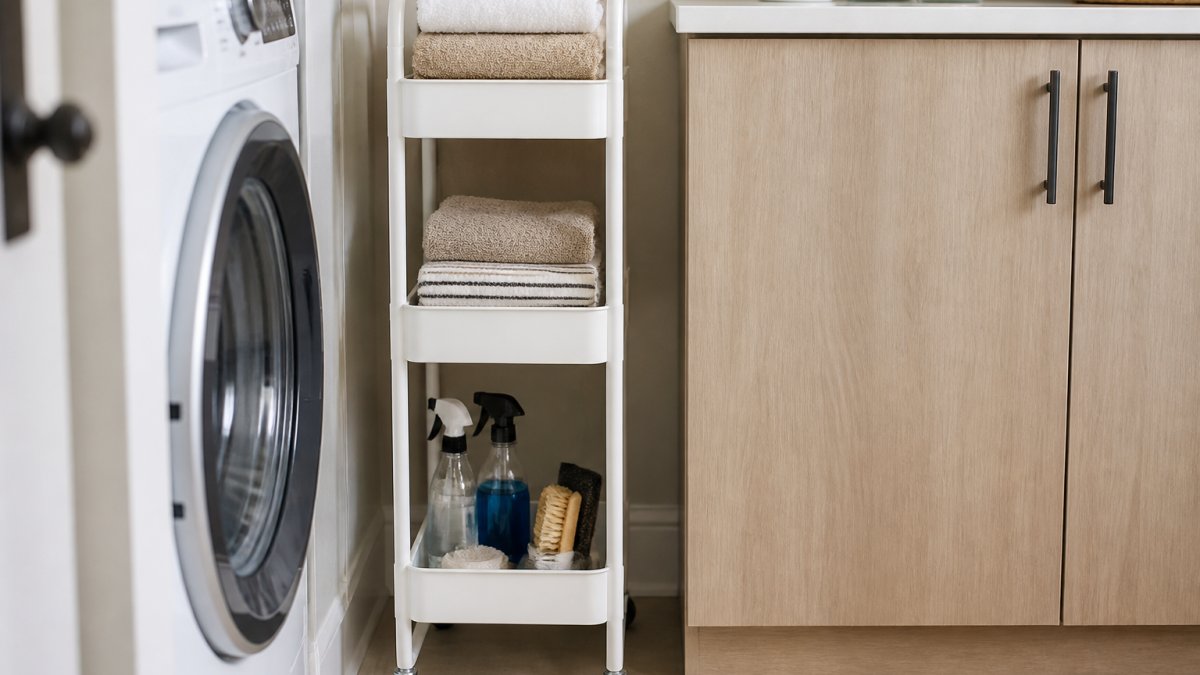
Mobile storage wins wherever supplies travel between rooms. The 5-Tier Rolling Plastic Utility Storage Cart at $45.99 has a slim profile that fits beside a washer or between cabinets, and two wheels lock so it stays where you park it. For a warmer look, the Two Tier Rolling Bamboo Storage Cart at $39.99 folds flat for storage and supports about 33 lb per tier.

Drawer and Countertop Organizers
Drawers are where good intentions go to die. The Natural Bamboo Drawer Organizer Set at $24.99 includes four trays with adjustable dividers and silicone pads to stop sliding, sized for standard bathroom, office, and kitchen drawers. On the counter, the Kitchen Microwave Stand with Drawer Organizer at $39.99 lifts a small appliance onto a wood top and adds a pull-out wire basket underneath.

Small Space Storage Solutions That Work
Small space storage solutions work best when they go vertical, stay mobile, and leave the walls intact.
The three moves that add capacity without damage
- Go vertical with tension and freestanding pieces. A tension rod in a closet, an over-the-door rack, or a tall freestanding shelf adds tiers without a single anchor hole. The SARENZOON Five Tier Bookshelf at $72.99 handles books and display items in a footprint narrower than most media consoles, and it moves with you.
- Put the floor line on wheels. Anything that touches the floor and holds supplies should roll. The 5-Tier Rolling Plastic Utility Storage Cart at $45.99 fits beside a washer or between cabinets, and two wheels lock so it stays put. Mobility also makes cleaning and repainting far easier.
- Use removable wall hardware where a wall mount is the only option. The Modern Floating Wall Shelves with Hidden Brackets at $50.99 hold up to 20 lb per shelf and mount with concealed hardware. In a rental, patch and repaint at move-out, either way, keep the per-shelf weight well under the rating.
Renter-friendly rules of thumb
- Measure the door swing and the closet depth before anything else. A cart that blocks a door is worse than no cart.
- Prefer modular over built-in. Stackable bins, foldable carts, and adjustable shelves reconfigure when you move; built-ins do not.
- Check the lease before anchoring. Many leases allow small picture-hanger holes but not shelving anchors; when in doubt, choose freestanding.
- Keep a patching kit. Spackle, a putty knife, and matching paint turn a wall of anchor holes into a security-deposit non-issue.
Where small-space systems fail
The common failure is buying containers before measuring the opening. A drawer organizer that is a quarter-inch too wide, or a bin that will not clear a closet shelf, gets returned or shoved into a corner. Measure the opening, then match the organizer to it. The second failure is over-buying: a room with five mismatched bins looks busier than a room with two well-chosen ones. Start with one zone, prove the system works for a month, then expand.
Small Closet Organization Ideas for Renters and Owners
Small closet organization ideas start with adjustable shelving, because fixed shelves rarely match what you actually own. Renters should favor freestanding pieces that leave the wall intact, while owners can build in.
The Tribesigns Wooden Shoe Cabinet at $210.99 holds up to 18 pairs across six tiers with adjustable spacing for boots and heels. For bedroom closets, the JHK Fabric Dresser with Charging Station and LED Lights at $143.99 combines fabric drawers, a hanging rack, USB ports, and an anti-tip device, which makes it a practical choice for a closet that doubles as a dressing area.
27.6'W X 60'H 5-Tier Garage Shelving Unit, 2200 LBS Heavy Duty Storage Shelves →
Decluttering Tips for Small Homes
Decluttering tips for small homes work best when they follow a sequence rather than a mood. Sort first, rehome second, store third, and only then buy containers.
The sort-and-rehome sequence
- Pull everything out of one zone at a time, not the whole house. A single drawer, shelf, or closet section is the unit of work.
- Sort into keep, rehome, and recycle piles. Be honest about the keep pile; a "maybe" box that sits for a month is a rehome box.
- Set a donation box by the door and fill it before the week ends. Local donation centers, community exchange groups, and buy-nothing networks keep usable goods in circulation instead of in a landfill.
- Measure the space before buying any organizer. The opening, not the product photo, sets the size.
- Label bins by category, not by room. "Batteries" travels; "hall closet" does not.
- Schedule a short weekly reset to stop the pile from rebuilding.
The maintenance schedule most guides skip
A setup that is not maintained fails within a season. The fix is a short, recurring calendar rather than a big annual purge:
- Weekly (10 minutes): return stray items to their labeled bin, empty the donation box into the car, and wipe one surface.
- Monthly (30 minutes): review one zone, a drawer, a shelf, a closet section, and rehome anything that has not been used since the last review.
- Seasonal (1-2 hours): rotate clothing and holiday storage, check that bins still match what you own, and replace any container that has cracked or lost its lid.
- Annually: re-measure high-traffic zones and adjust shelving heights or bin sizes to match the household as it changes.
Sustainable storage as a maintenance decision
Rehoming deserves its own step, and so does the material you rehome into. Choosing materials you can live with for years, bamboo, powder-coated metal, washable fabric, beats replacing brittle plastic bins every season. The bamboo and metal pieces in our collection hold up to repeated reconfiguration, and they can be wiped down rather than thrown out. When a bin does fail, check whether the local recycling program accepts that plastic before it goes in the trash.
The one-in, one-out rule
The simplest maintenance habit is the one-in, one-out rule: every new item that enters a zone displaces one that leaves it. It keeps storage capacity fixed while the household changes, and it turns decluttering from an event into a background process.
How to Choose the Right Modern Home Organization Essentials
Choosing the right modern home organization essentials comes down to four checks: the space you have, the weight you need to hold, the material that suits your household, and whether the piece can adapt later. Run each candidate through this framework before you buy.
| Check | Question to Ask | What to Look For |
|---|---|---|
| Space | Does it fit the floor or wall area? | Slim profiles, vertical tiers, foldable designs |
| Load | What weight must it hold? | Stated per-shelf ratings and frame material |
| Household | Will pets or kids stress it? | Metal frames, washable surfaces, anti-tip devices |
| Adaptability | Can it change with you? | Adjustable shelves, stackable bins, locking wheels |
A common mistake is buying containers before measuring the drawer or shelf they will sit in. Measure first, then match the organizer to the opening. If you are furnishing more than one room, buying from a single source can be convenient. We stock home organization, indoor furniture, pet supplies, and gardening essentials in one place.
Conclusion
The hardest part of organizing is not the first weekend of sorting. It is keeping the system running six months later, when new purchases and daily clutter test whether your storage can flex. Build around adjustable, modular pieces and the maintenance gets easier each season.
M & R Homestead stocks the shelving, carts, drawer organizers, and entryway pieces covered here, backed by fast shipping and a friendly team that answers questions before you order. Shop our home organization collection to build a setup that fits your space and your household.
Frequently Asked Questions
What are the best home organization products for 2026?
The best home organizing products in 2026 focus on flexibility and small-space efficiency. Look for adjustable shelving units, rolling carts with locking wheels, modular drawer organizers, and stackable bins. For example, a five-tier rolling cart at $45.99 fits beside a washer or between cabinets, while a bamboo drawer organizer set at $24.99 uses adjustable dividers to fit standard U.S. drawers. Prioritize pieces that adapt to your space rather than fixed furniture that locks you into one layout.
How can I organize a small home without adding clutter?
Start by decluttering before buying any storage. Remove items you have not used in a year, then measure your available space and choose pieces that use vertical space, like wall shelves or a five-tier rack. Small space storage solutions should earn their footprint: a rolling cart that moves between rooms or a shelving unit with adjustable shelves does more than a decorative basket. Keep surfaces clear and store only what you use weekly within reach.
What are the best ways to organize a small closet?
Small closet organization ideas start with adjustable shelving and vertical dividers. A six-tier shoe cabinet with adjustable shelves can hold up to 18 pairs and lets you change spacing for boots or flats. Add a fabric dresser with a hanging rack for clothes and bags, and use stackable bins on the top shelf for seasonal items. Measure the closet depth first, then choose units that leave walking room and keep daily items at eye level.
Which storage solutions make a small space look bigger?
Light-colored, wall-mounted shelves and slim rolling carts reduce visual clutter and keep floors clear, which makes rooms feel larger. Floating wall shelves with hidden brackets hold up to 20 lb each and draw the eye upward. A two-tier bamboo cart on wheels can move out of the way when not in use. Avoid bulky furniture and choose stackable bins that keep contents hidden but accessible.
What should I declutter before buying organizing products?
Declutter first so you do not buy storage for things you do not need. Sort items into keep, donate, and discard piles, then count what remains to size your bins and shelves correctly. Check expiration dates on pantry goods and remove worn clothing before adding drawer organizers. Once you know the volume, choose adjustable shelves and modular bins that fit the actual items, not the clutter you just removed.