

How to Design Balcony Gardens: A Step-by-Step Guide
Table of Contents
- How to Design Balcony Gardens: Start With a Plan
- Small Balcony Garden Ideas That Maximize Every Inch
- Balcony Container Gardening: Choosing Pots and Planters
- Best Plants for Balcony Gardens by Sun and Space
- Vertical Balcony Garden Ideas for Growing Up, Not Out
- Arranging Plants by Height, Color, and Texture
- Watering Systems, Vacation Care, and Ongoing Maintenance
- Frequently Asked Questions
Last Updated: October 9, 2026
How to Design Balcony Gardens: Start With a Plan
A balcony garden is a small-space growing area built in containers on a balcony, terrace, or other outdoor ledge. Designing one starts with three measurements: floor area, railing height, and how much direct sun the space gets each day. This guide from M & R Homestead walks you through the full process, from the first tape measure to the last watering can.
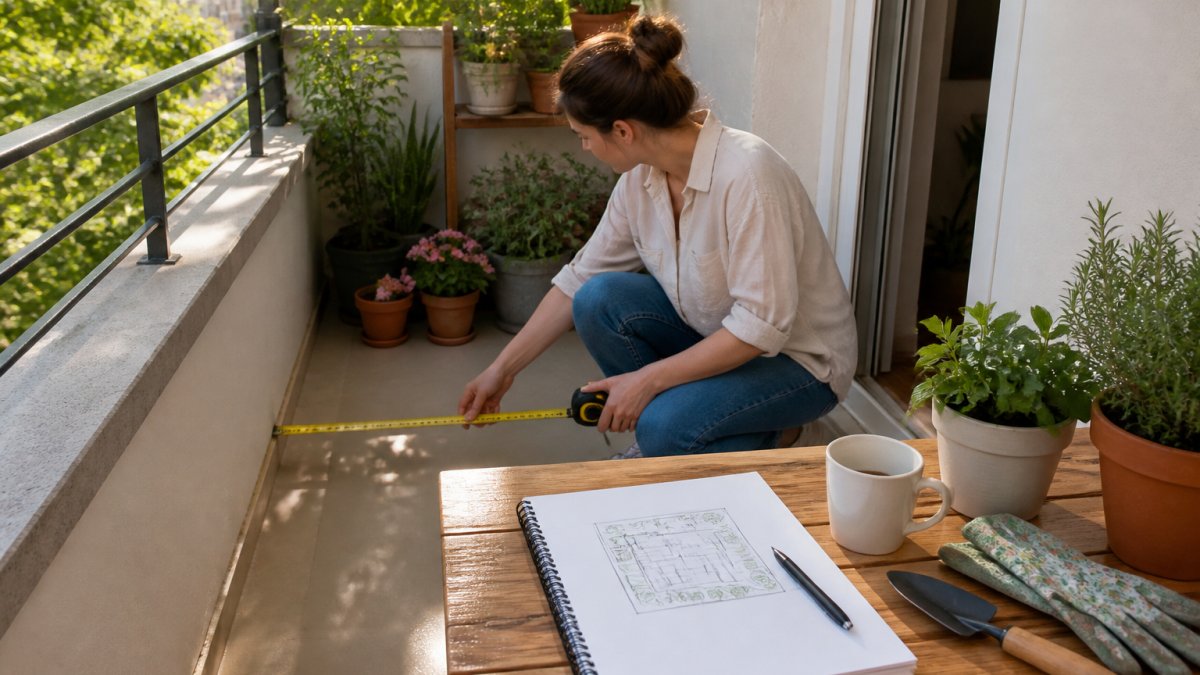
Most people buy plants first and figure out the space later. That order causes almost every problem that follows: pots that block the door, plants that burn in afternoon sun, and soil that drips onto the neighbor below.
Below is a repeatable design workflow you can run in an afternoon. It covers measurements, zones, circulation, and planter placement so the result is a layout you can actually live with, not just a pretty photo.
Step 1: Measure the Space
Start with a tape measure and a notepad. Write down:
- Floor length and width (in feet and inches)
- Railing height and whether it is solid, slatted, or glass
- Door swing width and which way it opens
- Wall height on any solid side (this is your vertical growing surface)
- Distance from the door to the railing (your usable depth)
Sketch the outline on graph paper at a simple scale, such as one square equals one foot. Mark the door, the railing, and any fixed items like a utility box or drain.
Step 2: Map Sun, Wind, and Microclimates
Sun exposure decides what you can grow. Watch your balcony at three points in the day: morning, midday, and late afternoon.
- Full sun (6+ hours): flowers, herbs, and most vegetables
- Part sun (3-6 hours): leafy greens, many herbs, and shade-tolerant flowers
- Shade (under 3 hours): ferns, hostas, and foliage plants
Wind matters just as much. Upper floors catch stronger gusts, which dry out soil and snap tall stems. A balcony also has microclimates: the corner near a brick wall stays warmer, while the open railing edge runs cooler and windier.
Step 3: Divide the Balcony Into Zones
A balcony has three usable growing zones plus one circulation zone. Most people only use the floor, which wastes half the space.
- Floor zone: large pots, a storage bench, a compact bistro set
- Railing zone: clip-on boxes, hanging baskets, trailing plants
- Wall zone: trellises, wall planters, green wall panels
- Circulation zone: the path you walk, which should stay clear
Step 4: Protect the Path
Leave at least a 2-foot-wide walking path from the door to the far end of the balcony. If the door swings outward, add the swing arc to that clearance so you are not moving pots every time you step outside.
Step 5: Check Load Limits Before You Fill Pots
Wet soil is heavy, and a balcony is built to hold a set amount. Large pots filled with damp soil can add up fast. Renters should check the lease and, when in doubt, ask the building manager before loading up a small balcony.
A few rules of thumb:
- Keep heavy pots near the wall, not the outer railing
- Spread weight across the floor instead of clustering it
- Choose lightweight resin planters over heavy ceramic or concrete where weight is a concern
- Leave at least a 2-foot path so the space stays usable
A practical middle ground is a lightweight planter that still looks solid. Our Resin Wooden Barrel Plant Planter gives you the look of a wooden barrel without the weight, and its built-in drainage holes help prevent overwatering.

Step 6: Place Planters by Priority
Place the items you use most where they are easiest to reach:
- Herbs and daily-harvest greens near the door
- Tall or heavy planters against the wall
- Trailing and railing plants along the outer edge
- Seating in the corner with the best view, not the best sun
Once the layout is on paper, buy plants. The plan will tell you how many pots fit, how big they can be, and which spots get the light each plant needs.
Small Balcony Garden Ideas That Maximize Every Inch
Small balcony garden ideas work best when they use three zones: the floor, the railing, and the wall. Most people only use the floor, which wastes half the space.
Try these layouts for a small balcony:
- Stack pots in a corner tower to free up the center
- Hang railing planters over the edge for herbs and trailing flowers
- Use a narrow bench with storage underneath for tools and soil
- Add a foldable bistro set so you can still sit outside
A compact seating setup keeps the balcony usable as a room, not just a plant shelf. The Outsunny Outdoor Metal Bistro Set fits two people, and the stackable chairs tuck against the railing when you are not using them.
Balcony Container Gardening: Choosing Pots and Planters
Balcony container gardening means growing plants in pots rather than in the ground. The pot you choose matters more than most people expect, because it controls drainage, root temperature, and how often you water.
What to look for:
- Drainage holes: non-negotiable, or roots rot
- Size: bigger pots dry out slower and need less watering
- Material: resin and plastic are light; ceramic and terracotta are heavy but stable
- Color: light pots stay cooler in strong sun
A common mistake is buying a pot that is too small. A plant in a cramped pot dries out daily and never reaches full size.
Drainage, Waterproofing, and Protecting Your Space
Water is the number one cause of damage to balconies below. Every pot needs a saucer or tray, and every tray needs to be emptied after rain.
For extra protection:
Resin Wooden Barrel Plant Planter For Indoor Balcony Decor →
- Add a waterproof mat under your pot cluster
- Lift pots on small feet so air moves underneath
- Never let water pool against the railing base or door frame
If you rent, this step protects your deposit. If you own, it protects the ceiling of the room below.
Best Plants for Balcony Gardens by Sun and Space
The best plants for balcony gardens are ones that match your light and wind conditions, not the ones that look best at the store. Match the plant to the spot, and half your maintenance disappears.
| Light Level | Good Choices | Watch Out For |
|---|---|---|
| Full sun | Herbs, succulents, flowers, dwarf fruit trees | Daily watering needs |
| Part sun | Leafy greens, most herbs, shade-tolerant flowers | Leggy growth toward light |
| Shade | Ferns, hostas, foliage plants | Root rot from wet soil |
Climbing vines, olive trees, and tropical plants all work on balconies when the light fits. Just check the mature size before you buy.
Flowers, Herbs, and Edible Plants That Work in Containers
You can mix all three in one balcony and still keep it tidy. Group them by water need so you are not soaking the succulents to reach the tomatoes.
- Flowers: petunias, geraniums, and marigolds handle sun well
- Herbs: basil, mint, rosemary, and thyme grow fast in pots
- Edible plants: cherry tomatoes, peppers, lettuce, and strawberries
- Succulents: great for hot, dry corners with little care
According to the USDA's home gardening guidance, container plants need more frequent watering than in-ground plants because the soil dries faster. Plan for that before you plant.
Vertical Balcony Garden Ideas for Growing Up, Not Out
Vertical balcony garden ideas turn walls and railings into growing space. When floor room runs out, height is the answer.
Options that work well:
- Trellis: lean one against the wall for climbing vines
- Wall planters: mount a row of small pots at eye level
- Green wall panels: pocket systems that hold many small plants
- Railing boxes: clip-on planters for herbs and trailing flowers
A trellis is the simplest start. Climbing vines like morning glory or jasmine will cover it in a season and add privacy at the same time.
Arranging Plants by Height, Color, and Texture
Plant arrangement follows one rule: tall in back, medium in the middle, short in front. This gives every plant light and keeps the display readable from inside.
Layer by height and growth pattern:
- Back: tall grasses, dwarf fruit trees, climbing vines on a trellis
- Middle: flowering plants and bushy herbs
- Front: trailing plants and low succulents
Then mix color and texture. A spiky grass next to a round succulent next to a trailing vine looks intentional. Ten of the same plant in a row looks flat.
Watering Systems, Vacation Care, and Ongoing Maintenance
Watering is the task that decides whether a balcony garden thrives or fades. Pots dry out fast in sun and wind, so a set routine beats guesswork.
Make it easier:
- Water in the morning, before the heat builds
- Check the top inch of soil before watering again
- Group thirsty plants together to save time
- Use self-watering planters for busy weeks
Self-watering pots store water in a lower reservoir and feed it up as the soil dries. The HiMISS Self Watering Planters Set has a clear window so you can see the water level and refill without disturbing the plant. That makes it a strong pick for anyone who travels.

For vacation care, move pots into shade before you leave. Shade slows water loss, and a full reservoir can carry most plants through a short trip.
Keep tools handy for quick upkeep. The Zoe Garden Tool Set covers planting, weeding, and trimming, and the tote keeps everything in one place.

A simple maintenance rhythm:
- Daily: check soil moisture, remove dead blooms
- Weekly: water deeply, rotate pots for even light
- Monthly: trim back growth, check drainage trays
- Seasonally: refresh soil, swap out spent plants
Frequently Asked Questions
How do you plan a balcony garden?
Start by measuring your balcony and checking its load limits, then track sunlight and wind patterns across the day. Sketch a layout that separates tall plants, containers, and seating. Choose lightweight pots with drainage, pick plants suited to your light levels, and plan a watering routine before you buy anything.
What plants grow best on a balcony?
The best plants for balcony gardens depend on your light. South-facing balconies suit herbs, vegetables, flowers, and dwarf fruit trees. Shade-tolerant options include ferns, hostas, and succulents. Compact varieties of tomatoes, peppers, and lettuce work well in containers. Always match plant choice to your actual sun exposure and wind conditions.
How do you design a garden for a small balcony?
Use vertical space with trellises, wall planters, and railing hooks to free up floor area. Choose stackable furniture and tall, narrow planters. Group plants by height so taller ones sit at the back. A self-watering planter set reduces maintenance and keeps the space tidy.
How do you arrange pots on a balcony?
Place larger, taller pots at the back or corners, medium plants in the middle, and trailing or low-growing plants at the front edges. Group pots in odd numbers for visual balance. Leave walking space and keep heavy containers near load-bearing walls. Rotate pots periodically so all sides get even light.
Designing a balcony garden takes planning, but it does not take a big budget or a big space. The hard part is matching plants to your light, weight limits, and schedule. M & R Homestead carries the planters, tools, and compact furniture that make the process simpler, with fast shipping and a friendly team behind every order. Browse our gardening essentials and start building your outdoor space today.