

How to Clean Pet Hair from Furniture: 7 Easy Steps
Table of Contents
- Gather Your Tools: What You'll Need Before You Start
- Step-by-Step: How to Clean Pet Hair from Furniture
- Fabric-Specific Compatibility Guide: What Works on Which Upholstery
- Best Pet Hair Remover for Couch: Tools That Actually Deliver
- DIY Pet Hair Removal Hacks Using Household Items
- Preventing Pet Hair Buildup on Furniture: Daily Habits That Help
- Allergy-Focused Cleaning: Reducing Dander Along with Hair
- Conclusion
- Frequently Asked Questions
Last Updated: September 11, 2026
Gather Your Tools: What You'll Need Before You Start
Learning how to clean pet hair from furniture starts with the right tools, removal is mechanical before it's chemical, so tools matter more than any spray bottle.
Pet owners often blame the vacuum when the attachment is the real problem.
Here's what to gather before you start:
- A vacuum with a crevice tool and upholstery brush attachment
- Rubber gloves or a clean squeegee
- A damp sponge or microfiber cloth
- A pumice stone (for embedded hair only)
- A lint roller or wide adhesive tape
- An anti-static spray, or a fabric-safe alternative
Step-by-Step: How to Clean Pet Hair from Furniture
The most effective way to clean pet hair from furniture is a four-stage process: vacuum, agitate, lift, and treat. Each stage handles a different layer of hair, from loose surface strands to deeply embedded fibers.
Work through the steps in order. Skipping ahead usually means redoing the earlier work.
Step 1: Vacuum with the Right Attachments
Start with suction, but not the standard floor head. Use the crevice tool for seams, cushion gaps, and where the backrest meets the seat, then swap to the upholstery brush for flat surfaces, it agitates fibers while suction pulls out hair embedded below the weave. Move in slow, overlapping passes; fast strokes leave hair behind.
Step 2: Work the Surface with Rubber Gloves or a Squeegee
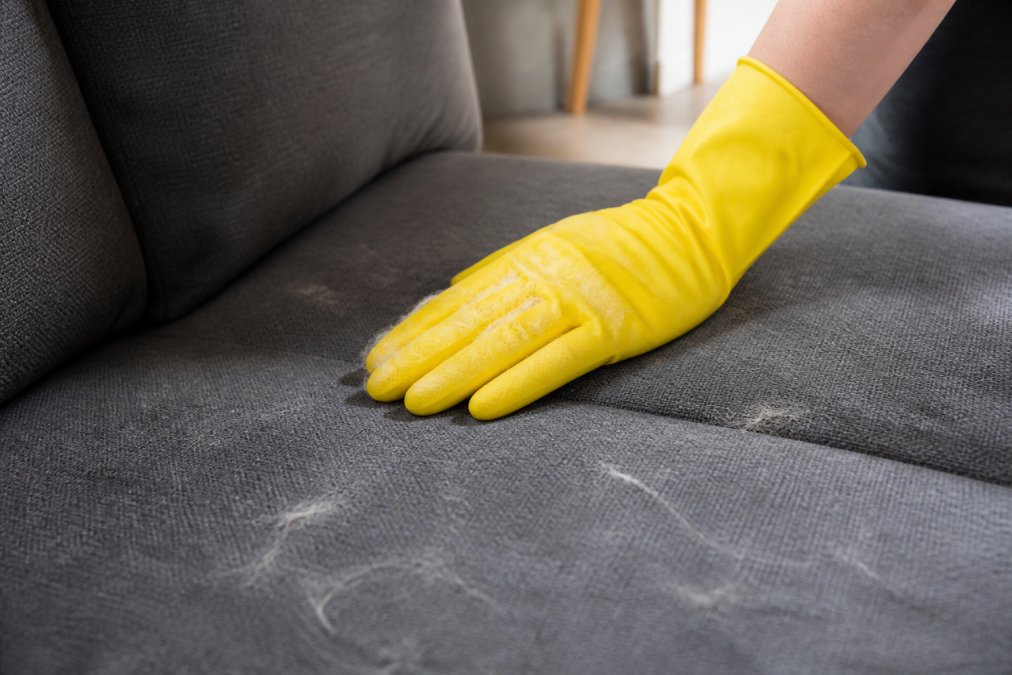
Rubber creates static and friction that grabs hair the vacuum misses. Pull on a slightly damp rubber glove and drag your hand across the fabric in one direction; hair clumps into rolls you can pick up by hand. A squeegee works the same way on larger surfaces, short strokes, consistent direction.
Step 3: Lift Stubborn Hair with Damp Sponges or Microfiber Cloths
A damp sponge or microfiber cloth picks up the fine hair gloves leave behind. Wring it out well, wipe with the grain, and rinse often, a saturated cloth just spreads hair around.
Step 4: Use Pumice Stones and Lint Rollers for Embedded Hair
For hair woven deep into the fabric, a pumice stone used gently in one direction can lift strands from most durable upholstery, test it on a hidden area first. Finish with a lint roller or wide tape to catch loose strands before they settle.
| Step | Tool | Best For | Time per Seat |
|---|---|---|---|
| 1 | Vacuum + crevice tool | Seams and gaps | 2-3 minutes |
| 2 | Rubber glove or squeegee | Surface hair clumps | 1-2 minutes |
| 3 | Damp sponge or microfiber | Fine leftover hair | 1-2 minutes |
| 4 | Pumice stone or lint roller | Embedded and loose hair | 2-3 minutes |
Fabric-Specific Compatibility Guide: What Works on Which Upholstery
"Test a hidden area" is useless without knowing what you're testing for. Every fabric responds to friction, moisture, and agitation differently, and the wrong tool can pill the surface, pull loops, mat a nap, or leave a shiny patch.
Before you touch anything, find the cleaning code. Most upholstery carries a small tag, usually under a cushion or along the deck, with one of four letters:
- W, water-based cleaners only
- S, solvent-based cleaners only (water can stain or shrink)
- WS, either water or solvent
- X, vacuum only, no liquid of any kind
That code governs what liquid you can introduce. It does not tell you which mechanical tool is safe, so use the fabric family below alongside it.
How to run a real test patch
Pick a spot hidden in normal use, the back of a cushion, the underside of a skirt, the deck under the seat. Apply the tool with the same pressure and direction you'd use on the visible surface, then wait a full hour, since some damage (nap flattening, pile distortion, color shift) doesn't show immediately. If the patch looks identical, proceed; if it looks shinier, flatter, or fuzzier, stop.
Tight-weave synthetics: polyester, olefin, nylon, acrylic
These are the most forgiving upholstery fabrics and the ones most pet owners own: tight weave, strong fibers, moisture-resistant. Rubber gloves, squeegees, damp microfiber, and a vacuum upholstery brush all work. A pumice stone with light pressure in one direction is safe on flat weaves only, not on anything with a visible nap or chenille texture. Trade-off: synthetics hold static more than natural fibers, so hair re-settles minutes after you clean. A light mist of anti-static spray on the fabric (not the wood frame) breaks that cycle.
Natural fibers: cotton, linen, wool blends
Cotton and linen trap hair differently than synthetics because their fibers have more surface texture, so hair works into the weave rather than sitting on top. Use a vacuum brush attachment first, then a barely damp microfiber cloth wrung until almost dry. Skip the pumice stone, it abrades natural fibers and can raise a fuzzy halo that never goes away. Wool blends are trickiest: agitation causes permanent felting, so use suction only (low setting if available) plus a lint roller, and never scrub wool with a damp cloth in circles.
Velvet, chenille, and any fabric with a nap
Nap fabrics have a raised surface that catches light differently depending on which way you brush it, which is why they show every mark. Pet hair sits on top of the nap rather than inside it, so a lint roller or a slightly damp rubber glove dragged in one consistent direction is the safe method. A vacuum brush will crush the nap, and a pumice stone or stiff-bristled brush will leave a bald track. If the nap flattens from normal use, a soft garment steamer held a few inches off the surface can lift it back, but test first, because some velvets are rayon-based and water-sensitive.
Leather and faux leather
Hair doesn't weave into leather, so it's the fastest surface to clean: a damp microfiber cloth wipes hair into a clump in one pass, and a vacuum with a soft brush attachment handles seams and stitching channels. Avoid abrasive tools, pumice, stiff brushes, and rough cloths can scratch the finish or dull the sheen. On finished leather, use a leather-safe conditioner after cleaning to prevent drying and cracking. Faux leather (polyurethane, vinyl) behaves similarly but cracks more at stress points, so keep moisture minimal and dry immediately.
Microfiber upholstery
Microfiber is a tight synthetic weave that feels soft but grabs hair aggressively thanks to its fine filaments. A damp rubber glove or squeegee works well, and a vacuum brush is fine, but a pumice stone can snag the fibers and create permanent pulls. Microfiber also shows water marks, so use the dampest cloth you can wring out, not a wet one.
Quick reference: tool by fabric
| Fabric | Rubber glove / squeegee | Vacuum brush | Damp microfiber | Pumice stone | Lint roller |
|---|---|---|---|---|---|
| Tight synthetics | Yes | Yes | Yes | Light pressure only | Yes |
| Cotton / linen | Yes | Yes | Yes, barely damp | No | Yes |
| Wool blends | No (felting risk) | Low suction only | No | No | Yes |
| Velvet / chenille | Yes, one direction | No | No | No | Yes |
| Leather / faux | No | Soft brush only | Yes | No | No |
| Microfiber | Yes | Yes | Yes, barely damp | No | Yes |
Best Pet Hair Remover for Couch: Tools That Actually Deliver
The best pet hair remover for couch use depends on your fabric and how much hair you're dealing with. Rubber gloves and squeegees win on cost and effectiveness for surface hair, working on nearly every fabric for almost nothing. Lint rollers are fastest for a quick pass before guests arrive, but disposable ones add up, reusable adhesive rollers are a better long-term buy. Pumice stones are strongest for embedded hair on durable synthetics and riskiest on delicate fabrics. A vacuum with a proper upholstery attachment handles the full job in one pass, and for daily shedders it's worth investing in: [our SucceBuy wet dry vac](https://mandrhomestead.com/products/succebuy-wet-dry-vac-2-6-gallon-2-5-peak-hp-3-1-portable-shop-vacuum-with-blowing-function-attachment-storage-for-floor) handles both dry hair and accidental spills. For lighter daily touch-ups, a cordless handheld vacuum keeps hair from building up between deep cleans.


DIY Pet Hair Removal Hacks Using Household Items
Every pet hair removal product is a variation on three physical mechanisms: friction, adhesion, or static. Once you know which one a household item uses, you can predict whether it will work on your furniture, and when it will fail. Use what you already own and skip the plastic gadgets.
Friction tools: rubber, silicone, and textured surfaces
Rubber and silicone grab hair because they create drag against the fabric surface, so hair clings to the rubber rather than the weave, which is why a rubber glove, a squeegee, or the rubber sole of a clean shoe all work on the same principle.
- A clean shower squeegee. Short, overlapping strokes in one direction. Works on tight synthetics, cotton, and microfiber. Skip on velvet, the blade edge can crush the nap.
- A rubber dish glove. Dampen it slightly to increase friction. Best on flat weaves.
- A clean rubber-soled shoe. Drag the sole across the cushion. Effective in a pinch, but the tread leaves streaks on some fabrics.
- A silicone spatula or pastry scraper. The flat edge works like a squeegee on tight weaves. Not for nap fabrics.
Trade-off: friction tools are free and reusable, but they take effort and don't reach hair embedded deep in a weave.
Adhesion tools: tape, rollers, and sticky surfaces
Adhesion lifts hair by sticking to it, but adhesive surfaces wear out, and stronger adhesive risks pulling fibers or leaving residue.
- Wide packing tape wrapped around your hand, sticky side out. An instant lint roller. Use short dabs, not long drags, long drags deposit residue on the fabric.
- Painter's tape. Lower tack, so it's safer on delicate fabrics and leaves no residue. Slower, but gentler.
- A slightly damp natural sponge. The porous surface grabs fine hair through capillary action. Rinse often, a saturated sponge just redistributes hair.
- A clean, dry kitchen sponge (the abrasive side). Use the scrub side lightly on tight synthetics only. Never on velvet, wool, or leather.
Trade-off: adhesion tools are safest for delicate fabrics but slowest and most consumable. Painter's tape balances safety and cost best.
Static tools: dryer sheets and anti-static treatments
Static is what makes hair re-settle minutes after you clean. Dryer sheets and anti-static sprays neutralize that charge so hair releases instead of clinging.
- A used dryer sheet. Wipe it across the fabric in one direction; residual fabric softener reduces static. Don't use a new sheet, the coating is too heavy and can leave a greasy film.
- A spray bottle with water and a drop of fabric softener. Light mist on a microfiber cloth, then wipe. Works on synthetics. Skip on leather and any fabric coded S or X.
- A metal hanger dragged across the fabric. The metal discharges static. Less effective than a dryer sheet but useful in a pinch.
Trade-off: static treatments are preventative, not corrective, use them after a friction or adhesion pass.
What not to use, and why
Some household items show up in pet hair hack lists and shouldn't:
- A wire pet brush or slicker brush on upholstery. Designed for fur, not fabric, they snag weaves and pull loops.
- A vacuum beater bar on delicate upholstery. The rotating brush is for carpet, not couch fabric; it can pill synthetics and destroy velvet.
- Vinegar or citrus sprays as a "hair release" treatment. They don't affect hair adhesion and can discolor dye on some fabrics. Save them for hard surfaces.
- A wet cloth on leather or fabric coded S or X. Water can stain, shrink, or crack these surfaces.
Preventing Pet Hair Buildup on Furniture: Daily Habits That Help
Preventing pet hair buildup on furniture comes down to reducing what your pet sheds and stopping hair before it settles into the weave. Groom your pet regularly, brushing outside or in a bathroom captures loose hair before it lands on the couch, and daily brushing makes a noticeable difference during heavy shedding seasons. Cover the furniture you use most with a washable throw blanket. Vacuum high-traffic seating every two to three days rather than waiting for a weekly deep clean; short, frequent passes keep hair from working into the weave. For households with allergies, [a steam cleaner](https://mandrhomestead.com/products/1500w-steam-cleaner-set-adjustable-high-pressure-steam-cleaner-with-various-nozzle-steam-cleaning-machine-for-home-appliance-car) can refresh upholstery between deep cleans without harsh chemicals.

Allergy-Focused Cleaning: Reducing Dander Along with Hair
Pet hair is visible; pet dander is what actually triggers allergies. Dander, microscopic skin flakes pets shed continuously, settles into fabric and clings to upholstery even when the surface looks clean, so removing visible hair is only half the job.
For allergy-focused cleaning:
- Wear a mask while vacuuming to avoid breathing in what you're lifting.
- Use a vacuum with a HEPA filter so fine particles stay trapped instead of blowing back into the room.
- Wash removable cushion covers in hot water on a regular schedule.
- Wipe down hard surfaces near the furniture, since dander settles there too.
- Run an air purifier in the room where your pet spends the most time.
The EPA's guidance on indoor air quality notes that controlling pet dander at the source, through grooming and regular cleaning, is more effective than trying to remove it after it spreads.
For a deeper clean, a steam cleaner set reaches into fabric fibers and lifts residue that surface cleaning misses.
Conclusion
Pet hair on furniture is a maintenance problem, not a one-time cleaning problem. Households that stay ahead of it clean in short, frequent passes and match their tools to their fabric.
M & R Homestead carries the practical pieces that make that routine easier: reliable vacuums with the right attachments, steam cleaners for deeper refreshes, and pet supplies for a home where animals are family. Our fast shipping and friendly service mean you're not waiting to get started.
Shop with M & R Homestead and build a cleaning routine your furniture, and your allergies, will thank you for.
Frequently Asked Questions
What is the most effective pet hair remover for upholstery?
A rubber glove or squeegee works best for most upholstery because the rubber creates surface friction that pulls embedded hair loose without damaging fabric. For deeper cleaning, a vacuum with a crevice tool or upholstery brush attachment removes hair from seams and cushions. Microfiber cloths and lint rollers handle touch-ups on smooth fabrics. The right tool depends on your furniture's weave: tight weaves respond well to rubber tools, while looser weaves need gentler vacuum suction.
Can a rubber glove really remove pet hair from a couch?
Yes. A slightly damp rubber glove creates static electricity and surface friction that lifts pet hair from fabric. Put the glove on, dampen it lightly, and wipe the couch in one direction. The hair clumps together and lifts off easily. This method costs almost nothing and works on most upholstery types. Rinse the glove as hair builds up, then keep going until the surface is clear.
How do I get dog hair out of a microfiber couch?
Microfiber traps hair in its tight weave, so start with a vacuum upholstery attachment using low suction. Follow with a damp microfiber cloth wiped in one direction to grab remaining hair. A lint roller or adhesive tape works well for final touch-ups. Avoid stiff brushes that can snag the fabric. For embedded hair, a pumice stone used gently in short strokes can pull strands free without damaging the surface.
How often should I clean furniture to manage pet shedding?
Vacuum upholstery at least once a week if your pet sheds heavily, and spot-clean daily with a lint roller or rubber glove. During peak shedding seasons in spring and fall, increase vacuuming to twice weekly. Regular grooming reduces how much hair reaches your furniture in the first place. A consistent routine keeps pet dander from building up and makes deep cleaning faster when you need it.