

Best Pet Friendly Indoor Plants 2026: Safe Picks
Table of Contents
- Best Pet Friendly Indoor Plants 2026: What to Know Before You Buy
- Quick Comparison: Pet-Safe Plants and Plant Stands
- Non-Toxic Plants for Cats and Dogs: The Safest Picks
- Indoor Plants Safe for Cats: Varieties That Hold Up
- Easy-Care Pet-Friendly Plants for Busy Households
- Pet-Safe Plants for Low Light Rooms
- How to Verify Toxicity and What to Do If Your Pet Chews a Plant
- Frequently Asked Questions
Last Updated: October 13, 2026
Best Pet Friendly Indoor Plants 2026: What to Know Before You Buy
Bringing home the best pet friendly indoor plants in 2026 starts with one rule: verify before you buy.
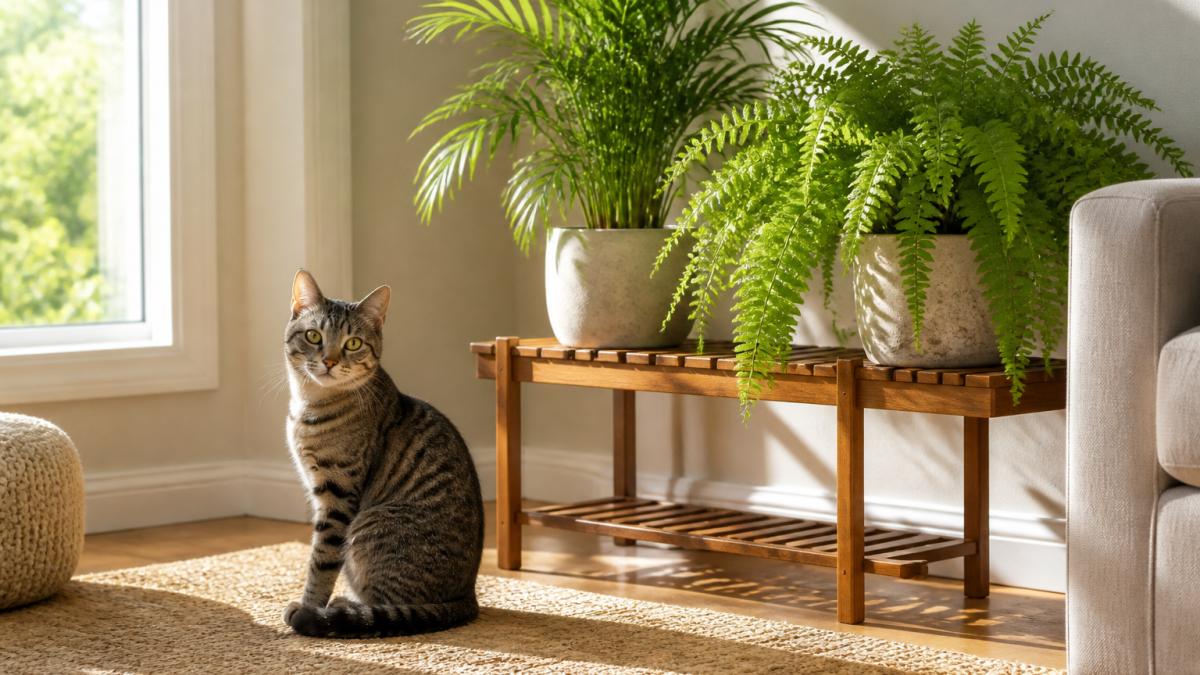
The ASPCA Toxic and Non-Toxic Plants database is the standard most plant sellers and veterinarians point to. It lists thousands of species by common and scientific name, along with which animals are affected. Bookmark it before your next nursery trip.
Below, we break down the safest varieties by category, what each one needs, and exactly what to do if your pet takes a bite.
Quick Comparison: Pet-Safe Plants and Plant Stands
Here is a fast reference for matching the right plant to the right spot in your home.
| Plant | Light Needs | Watering | Best For |
|---|---|---|---|
| Parlor palm | Low to bright indirect | Every 1-2 weeks | Beginners, low light |
| Boston fern | Medium indirect | Keep soil moist | Bathrooms, humidity |
| Peperomia | Medium indirect | Every 1-2 weeks | Desks, shelves |
| African violet | Bright indirect | Keep soil lightly moist | Windowsills |
| Christmas cactus | Bright indirect | Every 2-3 weeks | Winter color |
| Prayer plant | Medium indirect | Every 1-2 weeks | Low light corners |
A sturdy stand keeps pots off the floor and out of reach. The Tribesigns 5 Tier Indoor Plant Stand holds up to eight standard pots plus a top spot for a bonsai, and includes ten S-hooks for trailing foliage. At $163.99, it turns an empty corner into a full vertical garden.

Non-Toxic Plants for Cats and Dogs: The Safest Picks
Non-toxic plants for cats and dogs are species the ASPCA lists as safe for both animals, meaning they contain no known toxins that cause illness when chewed or ingested. The plants below are the ones we recommend most often to pet-owning households.
Parlor Palm and Areca Palm
Palms are the workhorses of a pet-safe collection. Parlor palm tolerates low light and stays compact, while areca palm grows taller and works well as a floor plant. Both prefer indirect light and soil that dries slightly between waterings. Areca palms are thirsty in summer, so check the top inch of soil weekly.
Boston Fern and Ponytail Palm
Boston fern loves humidity, which makes it a natural fit for a bathroom with a window. Keep the soil consistently moist and mist the fronds in dry months. Ponytail palm is the opposite: it stores water in its swollen trunk and would rather be neglected than overwatered. Water it every two to three weeks.
Peperomia, Hoya, and Maranta
This trio covers shelves, hanging baskets, and shaded corners. Peperomia comes in dozens of leaf shapes and stays small. Hoya produces waxy leaves and eventually trailing vines. Maranta, also called the prayer plant, folds its leaves at night, which makes it a conversation piece. All three want medium indirect light.
Indoor Plants Safe for Cats: Varieties That Hold Up
Indoor plants safe for cats are species with no listed toxicity to felines, but "safe" does not mean "chew-proof." Cats still nibble, and the plants that survive a curious cat are usually the ones with sturdy stems, dense or leathery foliage, and a growth habit that does not invite a paw swipe. The ASPCA Toxic and Non-Toxic Plants database is the reference most veterinarians and nurseries point to, and it lists each species by both common and scientific name so you can confirm the exact plant in front of you.
African Violet and Moth Orchid
African violets bloom almost year-round on a bright windowsill and stay under 10 inches wide, which makes them a good fit for a kitchen ledge or a shelf a cat cannot easily reach. Moth orchids, also called Phalaenopsis, are the orchid you see in every grocery store. Both are listed as non-toxic to cats and dogs. Water African violets from the bottom to keep leaves dry and reduce the risk of crown rot, and let orchid roots dry between waterings.
Christmas Cactus and Prayer Plant
Christmas cactus delivers color in winter when little else blooms. It wants bright indirect light and water every two to three weeks. Prayer plant, or Maranta, is the better pick for a dim room and folds its leaves at night. Both are cat-friendly, and both look good on a raised stand where a curious cat has to work harder to reach them. Keep in mind that Christmas cactus has segmented stems that can break off and scatter, so a cat that bats at it may leave a mess even if it does not get sick.
Spider Plant and Calathea
Spider plant is one of the most cat-tested plants in the country, largely because its arching leaves and dangling plantlets are irresistible to a bored cat. It is listed as non-toxic, tolerates medium indirect light, and recovers quickly from a trim. Calathea, sometimes sold as a prayer plant cousin, has patterned leaves and prefers medium indirect light with consistent moisture. Both are safe to chew, but spider plant in particular is a frequent target, so place it high or accept that it will look ragged.
SucceBuy Artificial Olive Tree 4/5/6FT Tall Faux Plant Secure PE Material →
Why Cats Chew and How to Reduce It
Cats chew houseplants for reasons that have nothing to do with hunger: boredom, fiber, and the texture of certain leaves. The practical fixes are placement and enrichment. Put the most tempting plants on a high shelf or a stand, offer a pot of cat grass or a catnip plant as a decoy, and rotate a few toys near the plant so the cat has something else to do. A plant a cat cannot easily reach is a plant a cat cannot chew, and that is faster than training.
Easy-Care Pet-Friendly Plants for Busy Households
Easy-care pet-friendly plants share three traits: they tolerate missed waterings, they do not need high humidity, and they grow slowly enough that repotting is rare. If you travel or work long hours, start with these.
- Ponytail palm: water every two to three weeks
- Peperomia: tolerates a dry week without drama
- Christmas cactus: thrives on neglect in bright indirect light
- Parlor palm: survives low light and irregular watering
Skip ferns if your schedule is unpredictable. Boston fern is safe for pets but demands steady moisture, and a crispy fern is a sad fern.
Pet-Safe Plants for Low Light Rooms
Pet-safe plants for low light solve the hardest room in the house: the one with a single north-facing window. Parlor palm, prayer plant, and most peperomia varieties handle these conditions. None will thrive in a windowless interior, but they will hold their shape for months.
For rooms with almost no natural light, a lifelike alternative is worth considering. The SucceBuy Artificial Olive Tree comes in 4, 5, and 6-foot heights for $76.99, uses PE material, and needs only a wipe-down once a month. Because it is not a live plant, there is nothing for a pet to ingest.
How to Verify Toxicity and What to Do If Your Pet Chews a Plant
Verification takes about two minutes and is the single most useful habit you can build before bringing a plant home. Search the ASPCA Toxic and Non-Toxic Plants database by both the common name and the scientific name, because nurseries sometimes sell the same plant under several labels and a common name can point to more than one species.
It also helps to understand what the database is actually telling you. Fiber, oxalate crystals in some species, and essential oils in others can still cause mouth irritation, drooling, or stomach upset (Oxalates Insoluble are Toxic To Pets).
If Your Pet Chews a Plant
- Remove the plant from your pet's reach and take a photo of it, including the pot and any tag.
- Note how much appears to be missing, even roughly.
- Identify the plant by its scientific name if you can.
- Call your veterinarian or a pet poison hotline with the plant name and the amount eaten.
- Watch for vomiting, drooling, lethargy, loss of appetite, diarrhea, or pawing at the mouth.
Do not wait for symptoms before calling. Early guidance from a vet is far cheaper than an emergency visit, and many exposures are managed at home once a professional confirms the plant is low-risk. If you cannot reach your vet, a pet poison hotline is staffed around the clock and can tell you whether the plant is a concern.
Symptoms That Warrant Immediate Care
Most non-toxic plant nibbles cause nothing more than a stomach ache, but some signs should send you to an emergency clinic right away: difficulty breathing, swelling of the mouth or throat, tremors, seizures, collapse, or vomiting that will not stop. These are uncommon with the plants on this list, but they are the reason a quick call is always worth the two minutes.
Frequently Asked Questions
What are the best indoor plants that are pet safe?
Palms, ferns, and peperomias are among the safest choices. Parlor palm, areca palm, Boston fern, ponytail palm, and most Peperomia varieties are considered non-toxic to cats and dogs by the ASPCA. Other reliable options include Hoya, Maranta (prayer plant), African violet, moth orchid, and Christmas cactus. These pet friendly plants offer varied foliage and light needs, so you can match one to almost any room. Always confirm the specific species before buying, since common names can be shared across toxic and non-toxic plants.
Are pet-safe plants completely harmless if a pet eats them?
No. Non-toxic means the plant is not expected to cause serious poisoning, but eating any plant can still lead to mild stomach upset, vomiting, or diarrhea in some pets. Cats and dogs lack the enzymes to digest plant matter well, so even safe foliage can irritate the digestive tract. Keep plants out of reach when possible, and contact your veterinarian or a pet poison hotline if your pet eats a large amount or shows concerning symptoms like repeated vomiting, drooling, or lethargy.
How can I keep cats and dogs from chewing on houseplants?
Place plants on elevated stands or shelves that pets cannot easily reach, and offer a cat grass or pet-safe chew alternative nearby. Bitter-tasting sprays formulated for plants can discourage nibbling, and providing sturdy vertical plant stands keeps foliage off the floor. For determined chewers, choose hanging planters or wall-mounted shelves. Pairing physical barriers with enrichment, like toys and climbing towers, reduces the appeal of houseplants. Consistent training and redirection work better than punishment for most pets.
Which pet-friendly indoor plants are easiest to care for?
Ponytail palm, Hoya, and most Peperomia varieties tolerate infrequent watering and average indoor humidity, making them forgiving for beginners. Parlor palm and areca palm also adapt well to typical home conditions. For low light, prayer plant and some ferns perform reasonably well. Easy-care pet-friendly plants generally need watering every one to two weeks, indirect light, and occasional dusting. Always check the specific plant's light and water preferences, since even low-maintenance varieties vary.
Are pet-safe plants for low light actually safe for cats and dogs?
Many low-light plants are non-toxic, but not all. Prayer plant, parlor palm, and some ferns handle lower light and are considered safe for cats and dogs. However, popular low-light plants like pothos and peace lily are toxic, so verify each species individually. Check the ASPCA toxic and non-toxic plant database for the exact variety, and choose plants suited to your room's natural light level to keep them healthy and reduce the chance of stress-related decline that can make plants more tempting for pets to investigate.